
My friend Jae introduced me to a concept she calls a “cleaving factor”. I look forward to her correcting my understanding of a cleaving factor as a simplified model, of a complex space1, that explains or predicts a system response, using heuristics, for scenarios with adequate pattern strength to be valuable. I have been applying these to my practice without realizing it. For example, I frequently produce 2 x 2 plots and other models that help me understand phenomena that impact my professional work.
I will share some plots I use to help me think going forward. This entry is an explanatory reference of their utility. I will explain why I need them before I further decode cleaving factors.
My mind is inadequate. I do not have enough thinking resources to do all the things I want it to do. I have working memory, long-term memory, thinking speed, information input rate, and other constraints that limit my throughput (thinking per unit time) and total space (amount of information in thinking). A way to address these constraints is to spread thinking over more time and condense information into lower fidelity chunks that remain useful.
Strategic precognition creates reusable assets. Making and sharing valuable information chunks creates value for makers and the recipients. The value to information makers of engaging the distillation process is probably understated. It may be easier to observe and assess producers sharing distilled knowledge with recipients than applying it to their own work. This obscures why activities like storytelling and writing are a necessary part of generating valuable heuristics that serve the producer.
Production develops special expertise. Producers retain a fluency with heuristics they make that is harder to share. This lets them apply and remix distilled intelligence to exceed their instant capacity. Recipients may become fluent, or they may be effective mimics. We find out if recipients have mastered a heuristic when the problems become big, fast, and complex. I make cleaving factors because I seek work that exceeds my instant thinking capacity and requires me to become fluent with tools that do not exist or are not shared.
This pattern is AI-forward. People who access this metacognitive process of reducing implicit heuristics to declared practices will be more effective working with machine intelligence. The distillation process pushes us to declare objectives (desired outcomes), value function (paths that yield more utility), boundaries (constraints on approach), and context (shaping information including existing knowledge and starting state). Providing these inputs to machine intelligence operations translated for the local operating context turns AI into more accurate and precise tools.
A proposed cleaving factor definition.
simplified model: turns a complex problem into something with fewer elements, accepting some loss of detail in exchange for ease of use and speed.
of a complex space: applies to situations with many interacting variables, paths, or outcomes, where reasoning directly about the whole system would be slow or impractical.
explains or predicts a system response: helps you understand how the system behaves or anticipate what is likely to happen when certain conditions are present.
using heuristics: relies on simple decision criteria supported by observations rather than exhaustive analysis or precise calculation.
for scenarios with adequate pattern strength: is only applied where the patterns are consistent enough that the simplification holds and produces reliable guidance.
to be valuable: delivers more practical utility than a more precise but harder-to-use model, especially under time, attention, or cognitive constraints.
Cleaving factors are powerful because they push us to focus on the features that are most relevant in the current problem space. This creates models that are simple and powerful when they are applied to the appropriate context. Correct application requires discrimination and discipline. Select a useful cleaving factor. Apply that to the appropriate regime of the total context.
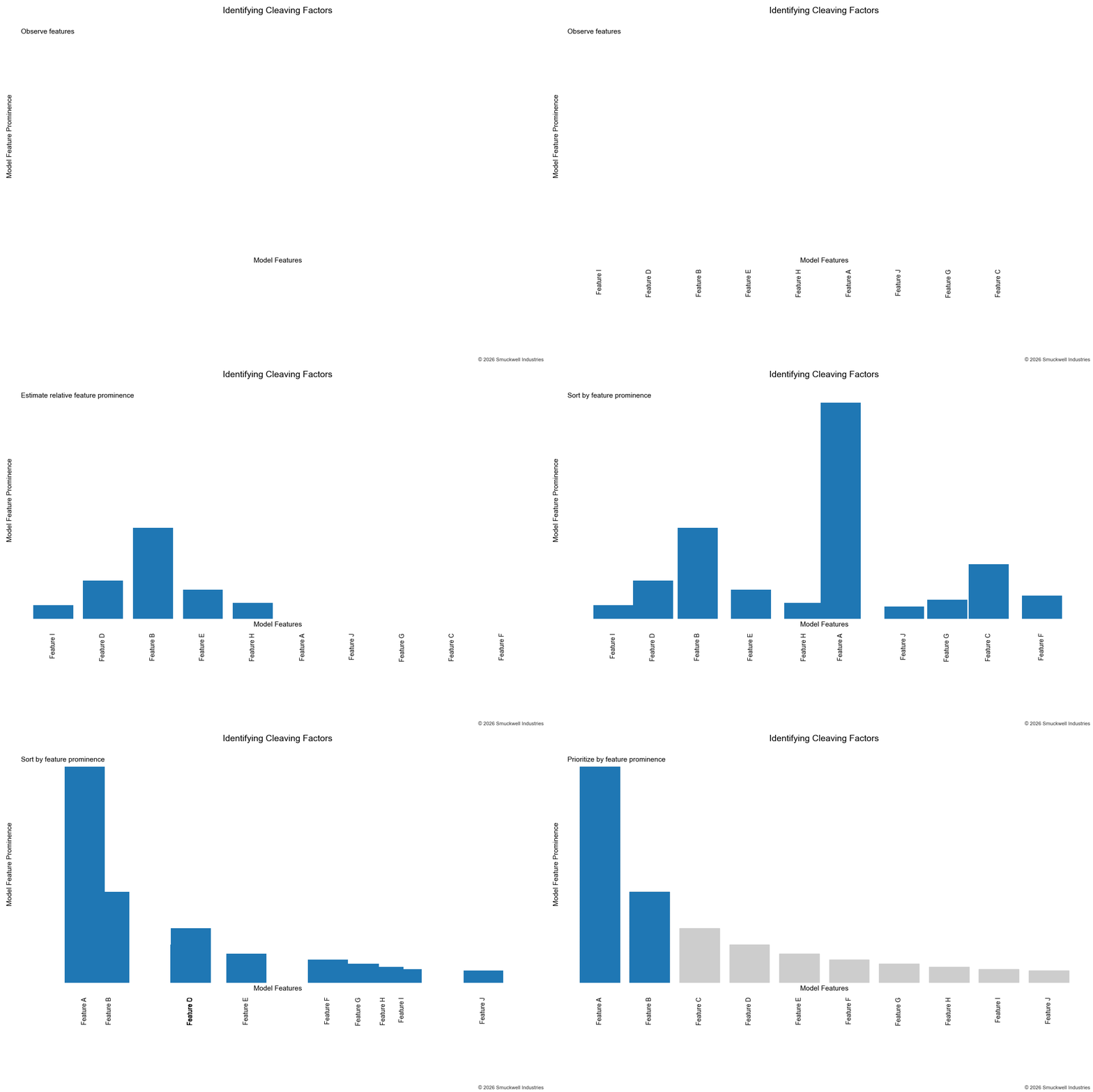
A starting place is to identify all of the features that are relevant to describe a scenario of interest. Figure out the ones that seem to matter most because they correlate with a useful state or outcome. Then start mixing and matching those features with the states and outcomes to see what coalesces and expresses valuable relationships. This is easier than it sounds. The animation below summarizes the conceptual discrimination process.
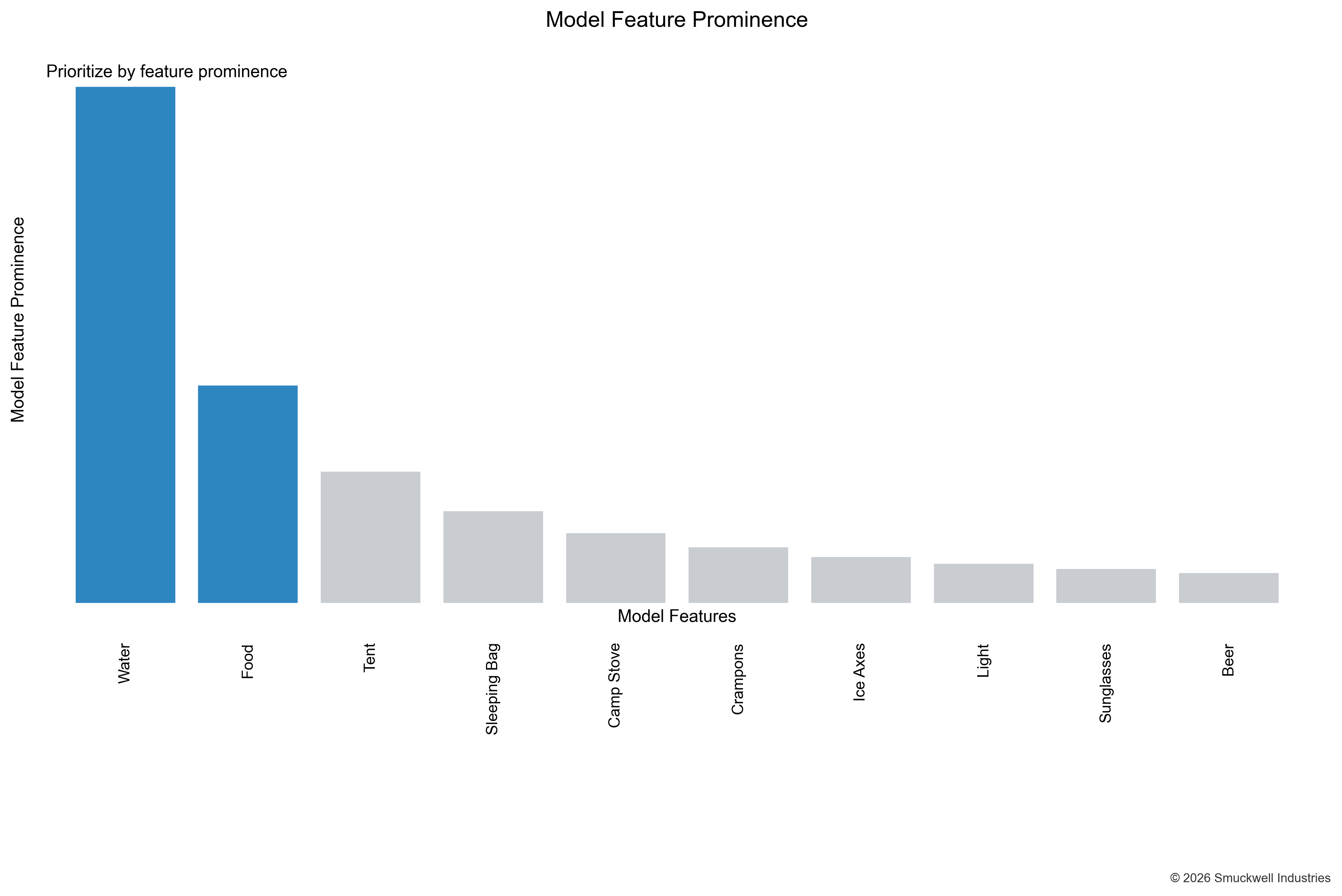
Let’s make this more concrete by imagining you are planning a multi-day adventure trek, in snowy mountains, during the winter. There are many features of material preparedness you could observe for this activity. To simplify the analysis to understand features that combine to predict interesting outcomes, pick a couple of the most prominent features and see how they combine.
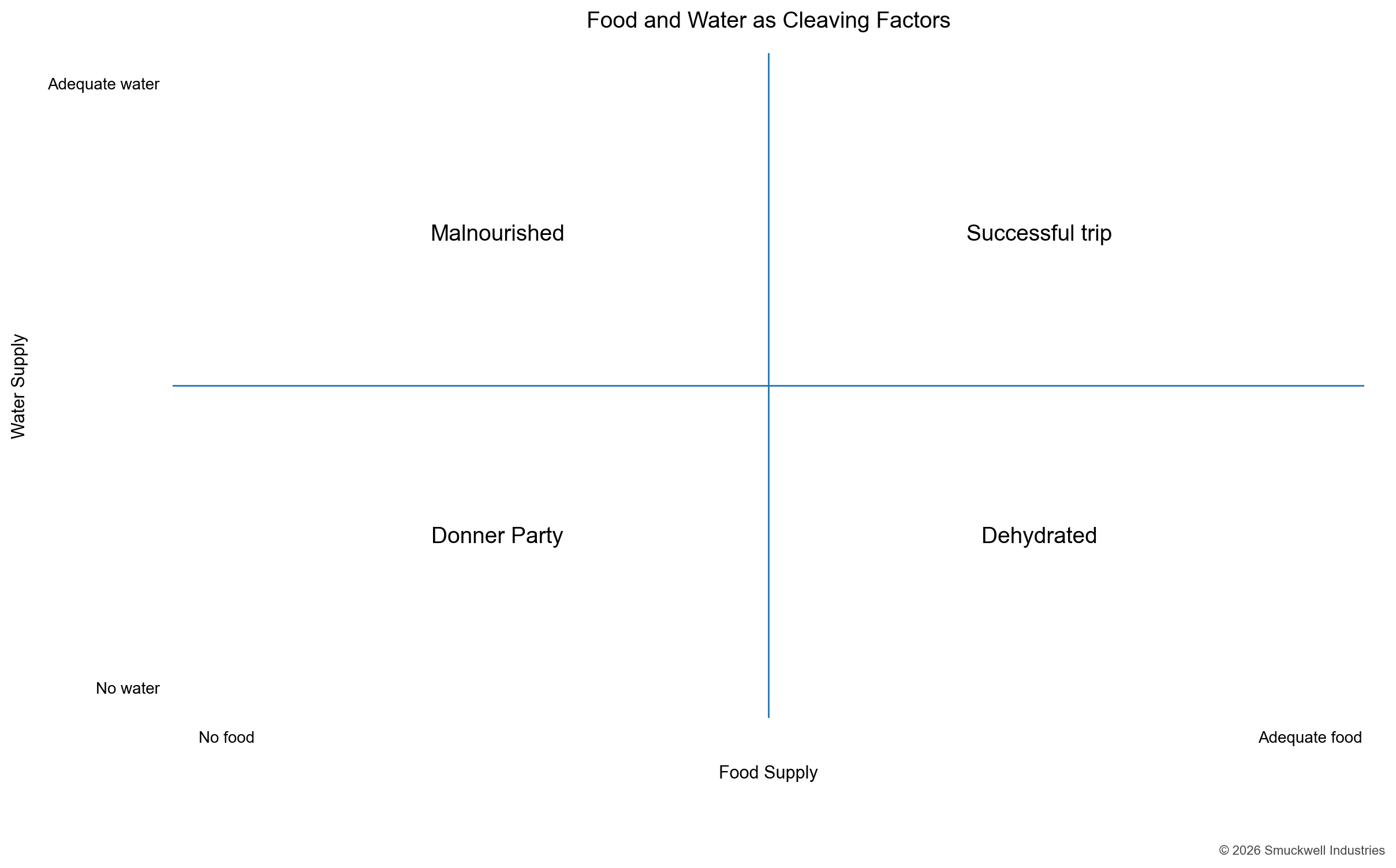
We can plot these features as two axes with high and low values. We can then segment the plot into quadrants that attach an archetypal outcome or state that commonly results from the intersection based upon our observations. We are starting to declare heuristics with cleaving factors as discriminants. As we make and share these heuristics we train ourselves to pay attention to these cleaving factors based upon pattern similarity.
You can also adjust the valence of cleaving factors by grouping features to create synthetic cleaving factors. We commonly hear people talking about discussing things “at the right altitude”. That is adjusting the level of abstraction for the underlying details to the common level of understanding for the audience so everyone can participate. Adjusting cleaving factor valence is similar.
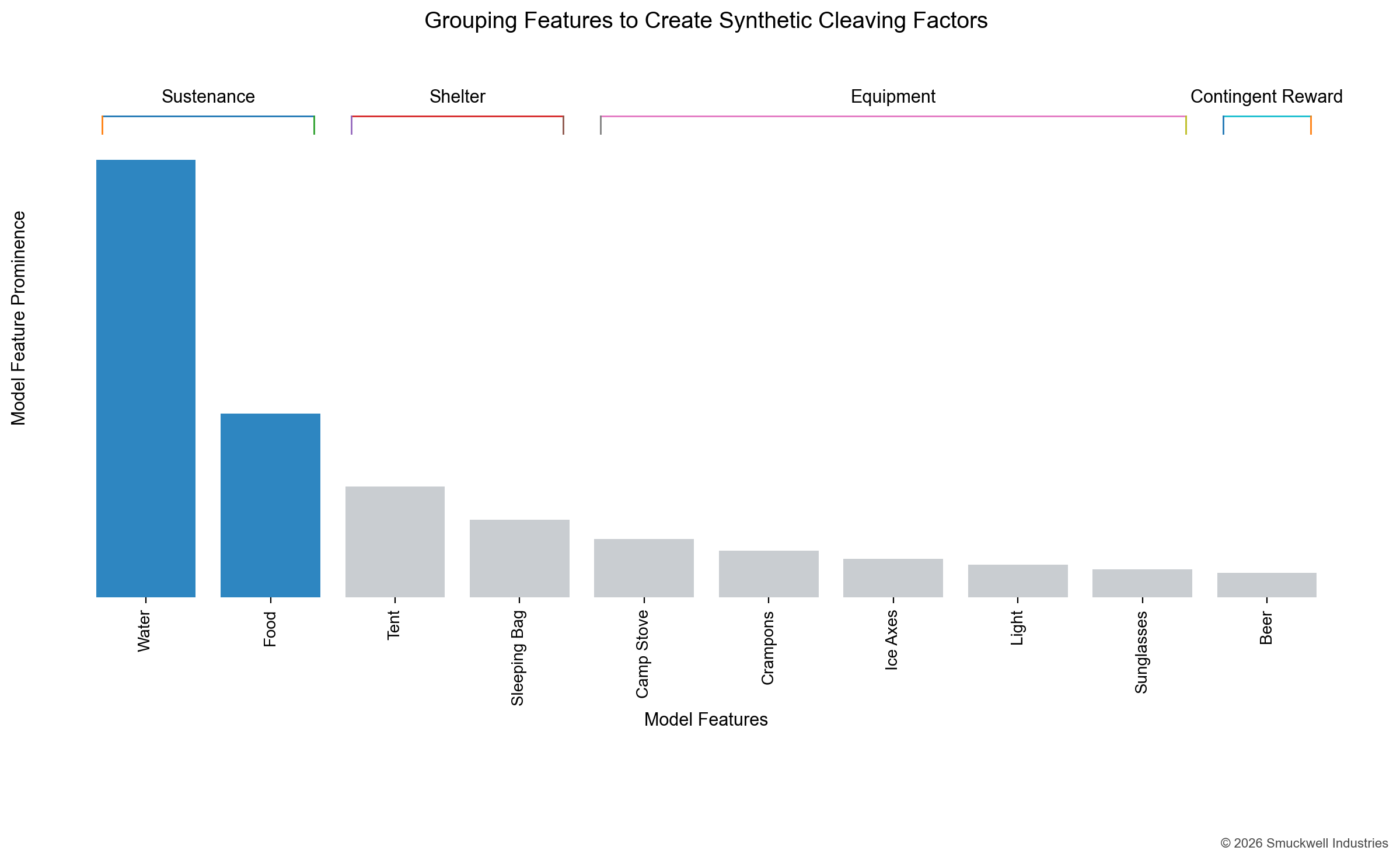
With this view we see that features can have improved predictive and explanatory power when they are grouped elegantly. This elegance benefits from wisdom and experience. We refine groupings over time as we see clusters produce stronger correlations between patterns and outcomes that impact decisions.
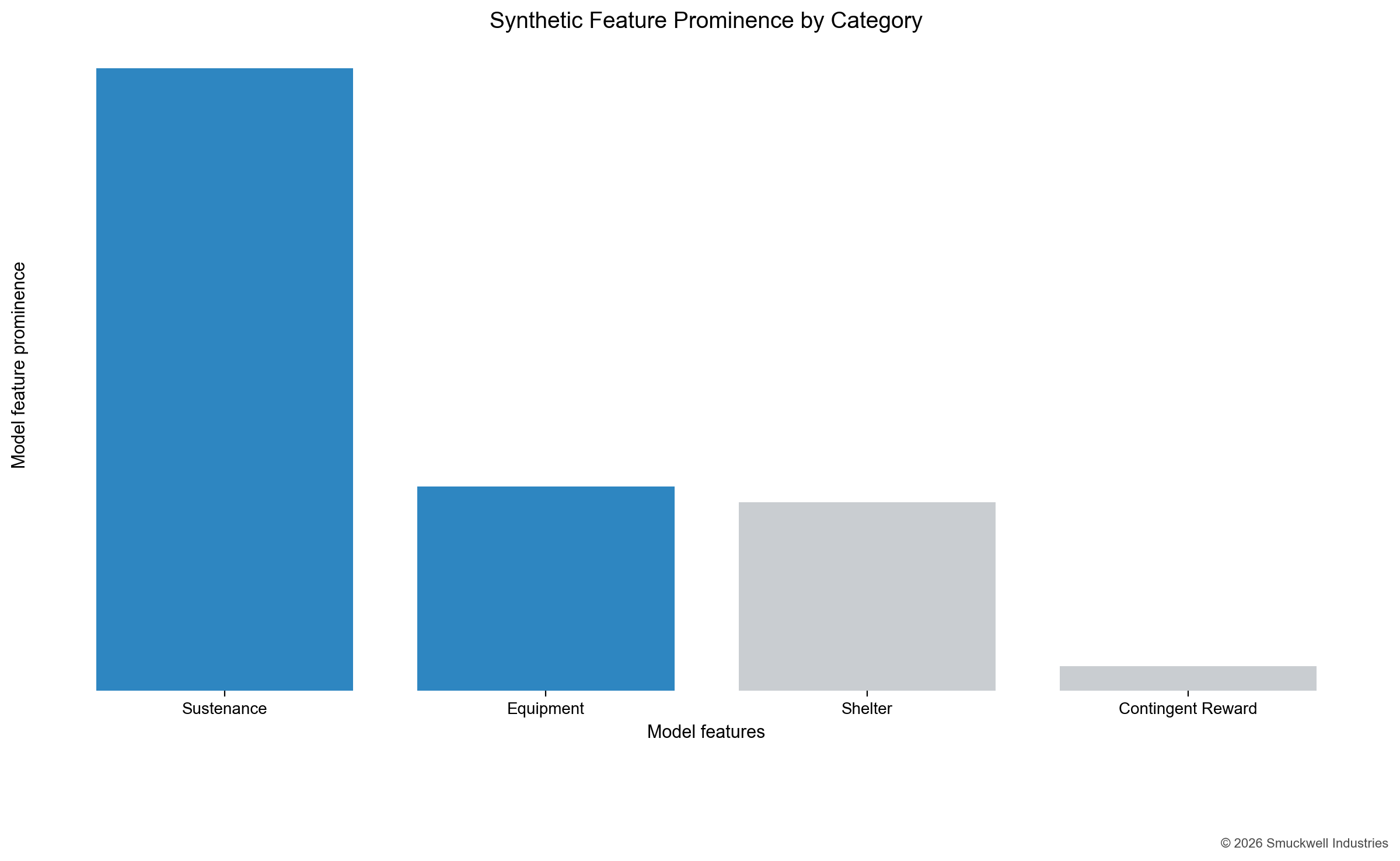
We can use synthetic features to create a new 2 x 2 that expresses the patterns at a different altitude.
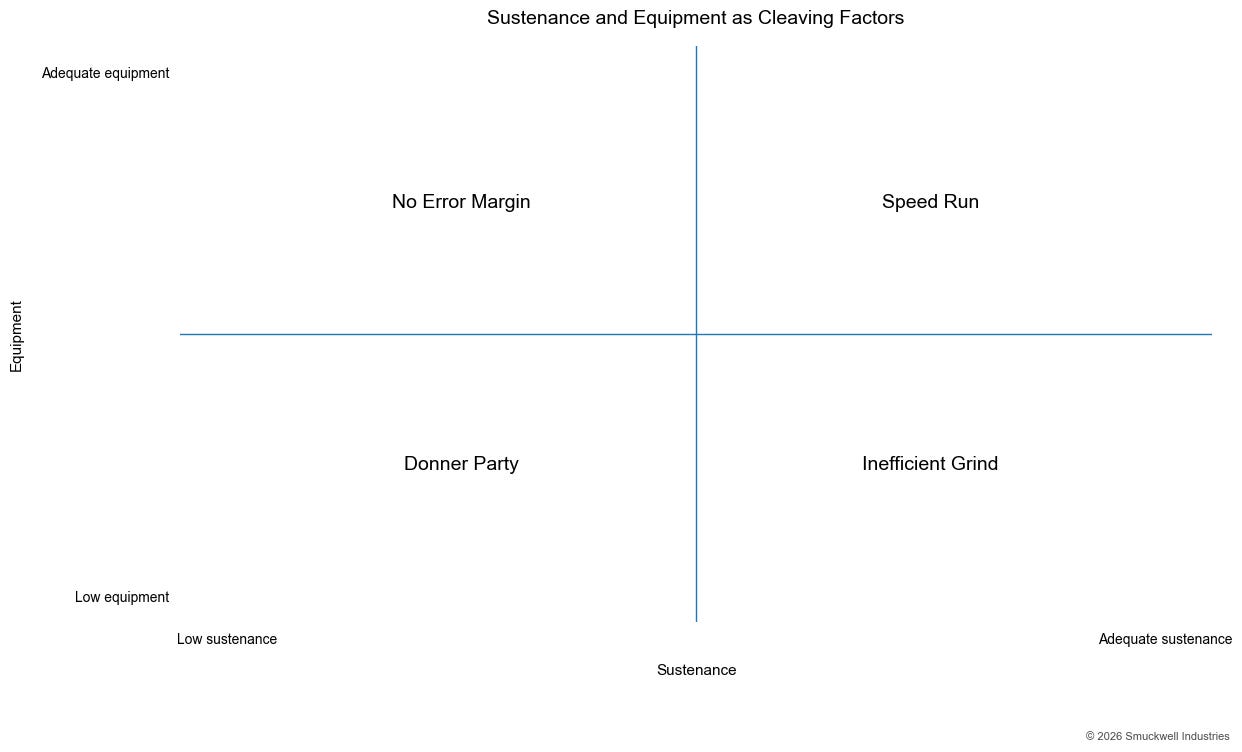
This is a fanciful example, but I hope it highlights a notion: understanding how information connects to create simpler models that are easier to use and retain fidelity is art that might come from experience. A challenge when making these tools for others is tuning them for your audience. Everyone brings different experiences with them and their desire and willingness to decode varies.
I look forward to sharing visualizations that present cleaving factors I find interesting. The example below is one I have been thinking about.
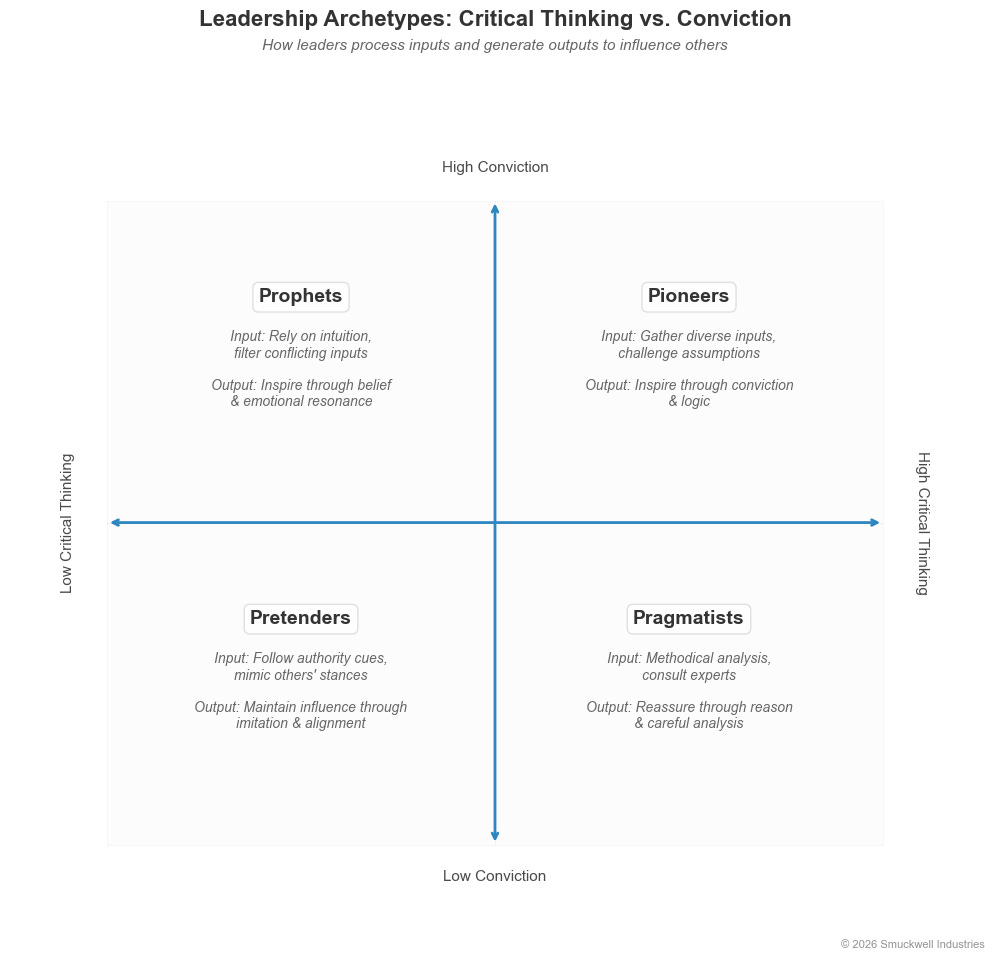
People with math affinity may recognize this pattern of reducing higher order complexity within a localized space as a geometric manifold.