
I have a recurring thought at work: “Should we be putting more hunters or farmers on this issue?” This intuition speaks to a larger pattern leaders can access with more intent to help individuals, teams, and organizations deliver better outcomes. A quick look on this post is available. Let’s get weird.
Adapting to an increasingly complex (intricate) and complicated (interconnected) business landscape requires us to structure teams that can simultaneously drive innovation, maintain operational excellence, and adapt to changing market conditions. Linda Hill expresses this as “moving beyond either-or thinking to both-and thinking”. The framework below identifies leader archetypes within this evolutionary context by plotting leader characteristics on exploration-exploitation and systematic-adaptive axes. These archetypes provide models for where and how we deploy these strengths to deliver success. This is reductive. It might also be useful.
The Leadership Archetype Quadrants
Presume four distinct leadership archetypes emerge from the intersection of two dimensions: the leader’s orientation for new or existing value (exploration vs. optimization) and the leaders approach for finding it (systematic vs. adaptive). Each archetype has strengths, challenges, and optimal contexts for deployment.
Systematic-Adaptive vs. Exploration-Optimization
We can map the leadership archetypes onto our generalized systematic-adaptive and exploration-optimization axes.
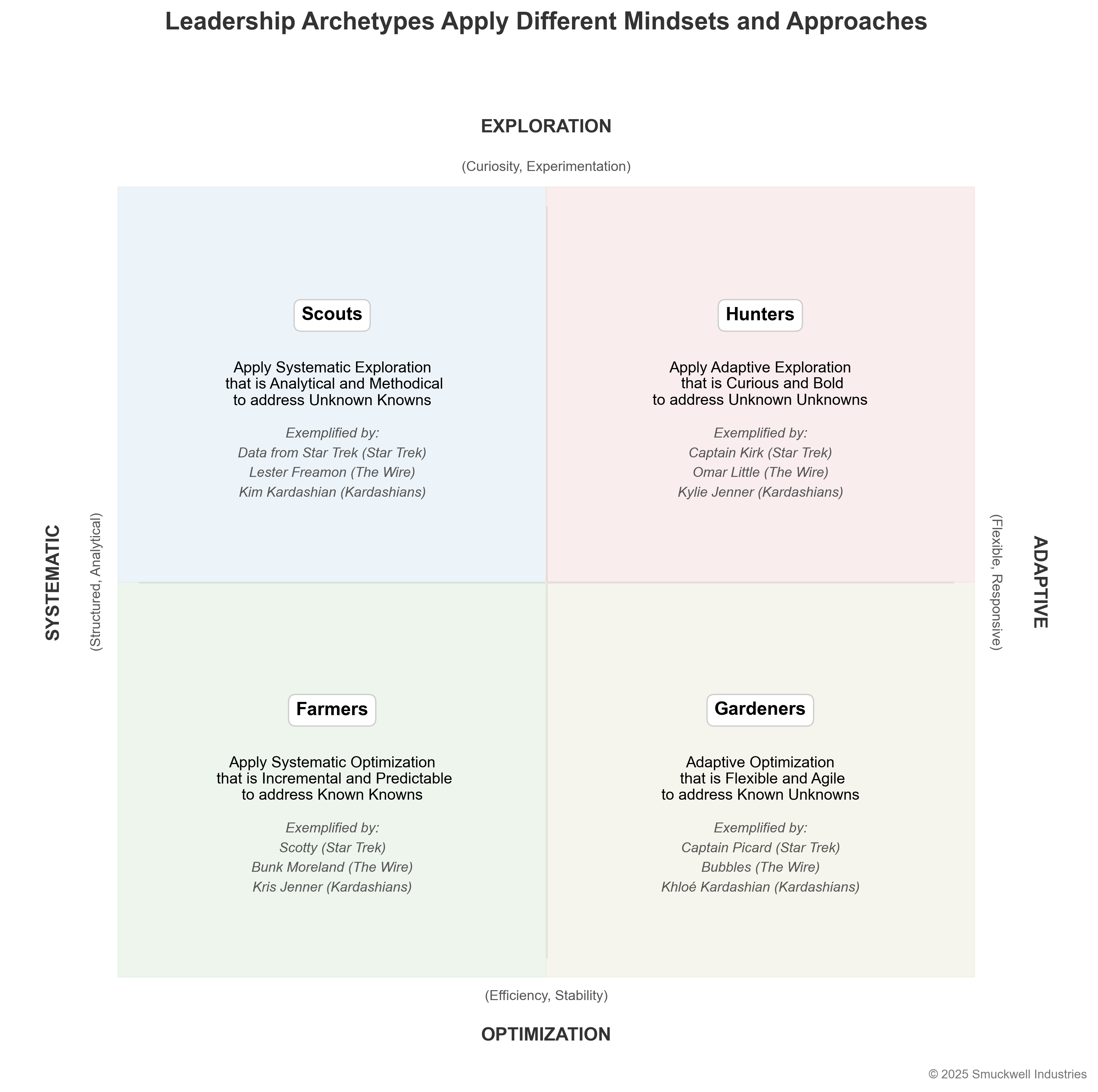
Figure 1: The Leadership Archetype Quadrant - Illustrating the relationship between systematic/adaptive approaches and exploration/optimization orientations.
Scouts: The Methodical Explorers
Positioned in the systematic-exploration quadrant, Scouts excel at comprehensive analysis and structured investigation. With their analytical mindset, they meticulously map landscapes before committing resources. They’re invaluable for research-intensive initiatives, strategic planning, and risk assessment. Their systematic approach ensures no stone remains unturned, though they may struggle with rapid decision-making.
Hunters: The Agile Opportunists
In the adaptive-exploration quadrant, Hunters thrive on identifying and pursuing emerging opportunities. Bold and curious, they excel in uncertain environments that require quick pivoting and experimentation. These leaders drive breakthrough innovation and market expansion but may create instability when placed in roles requiring consistent execution.
Farmers: The Disciplined Optimizers
Occupying the systematic-optimization quadrant, Farmers excel at creating predictable, incremental value through methodical processes. They build and maintain stable operations, establishing reliable systems that deliver consistent results. While exceptionally effective at efficiency improvements, they may resist necessary disruption during periods of significant change.
Gardeners: The Responsive Enhancers
In the adaptive-optimization quadrant, Gardeners cultivate continuous improvement while maintaining flexibility. They balance stability with responsiveness, adapting established processes to evolving conditions. These agile leaders excel in change management and organizational development, creating environments where improvements flourish organically.
Mapping Archetypes to Problem-Pattern Frameworks
We can also map the archetypes onto developed problem-pattern frameworks like the The Rumsfeld Matrix and the Cynefin Framework. These provide other ways the leader model can be applied to problem-type domains and problem-solving contexts.
Mapping Leadership Archetypes onto the Rumsfeld Matrix
The Rumsfeld Matrix focuses on if something is known to exist (awareness) and if its nature is discerned (understanding). We can map into this matrix directly.
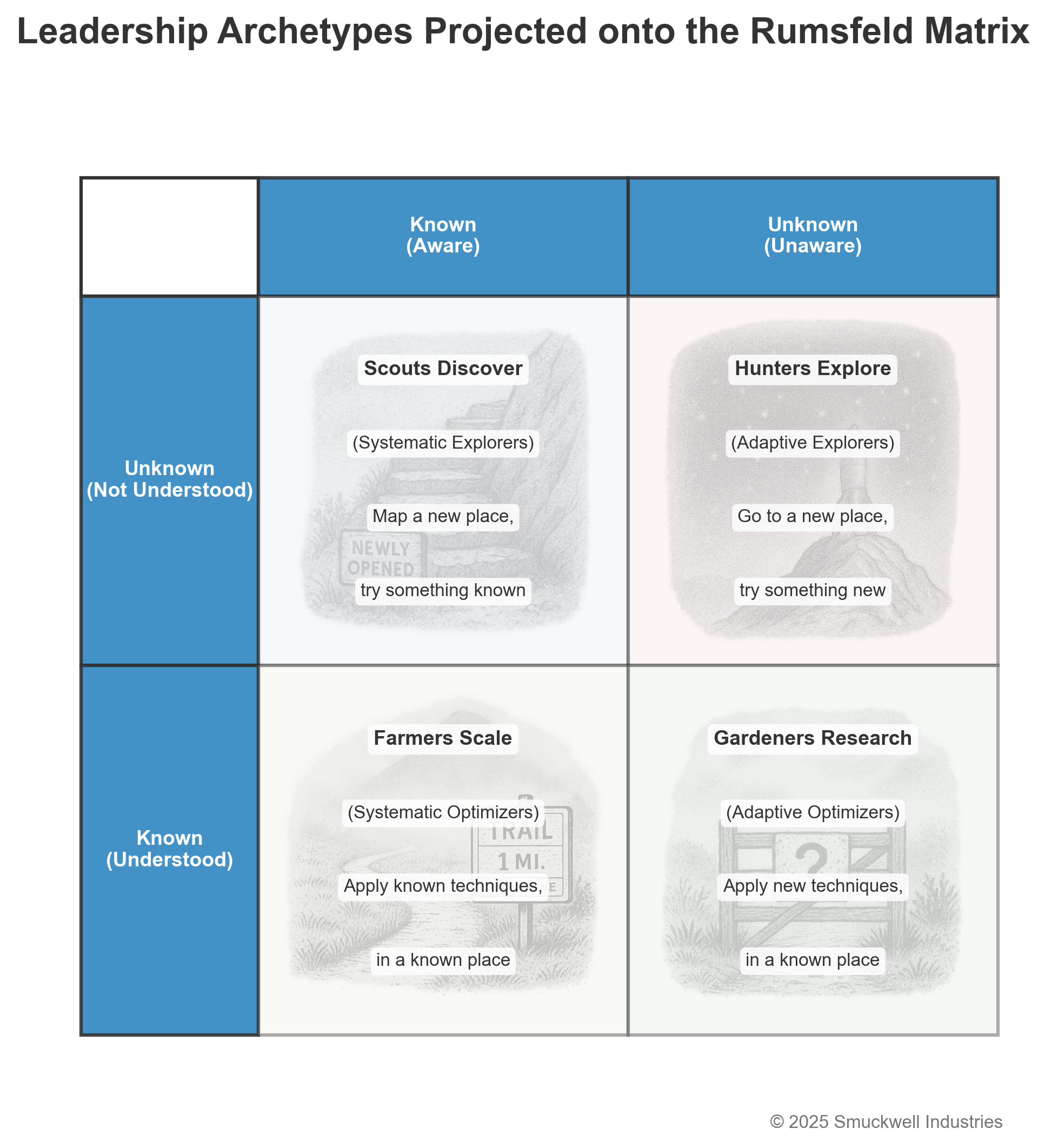
Figure 2: The Rumsfeld Matrix of awareness (knowledge something exists) and understanding (knowledge of what to do).
Mapping Leadership Archetypes onto the Cynefin Framework
Cynefin focuses on the nature of ordered and disordered problems. Cynefin’s practice sequence recommendations (i.e., the sequence of act-categorize-analyze-probe-respond-sense) applied to clear, complicated, complex, and chaotic domains offer pattern convergence with the archetypes. Some may argue that Scouts and Gardeners should be inverted here, and I am open to that. My approach puts experiments in the domain of Gardeners, and that is typically how you work through the complex.
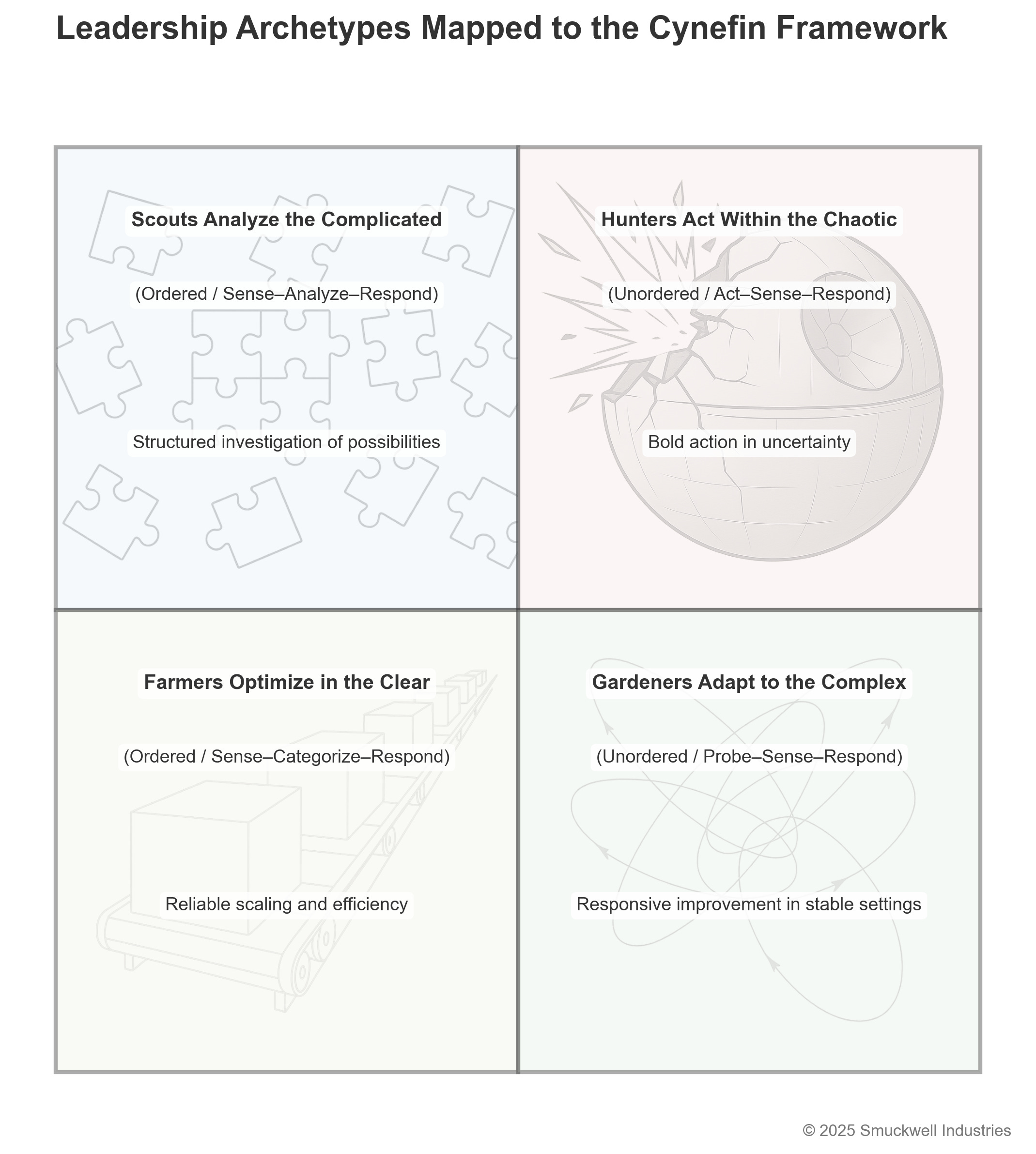
Figure 3: The Cynefin Framework (Clear, Complicated, Complex, and Chaotic) expressed in quadrant form.
Archetype Recognition: Popular Culture Examples
The archetypal abstractions are frequently expressed in popular culture. These concrete representations can make it easier to identify, understand, and engage the archetype. The specific classification examples are very debatable.
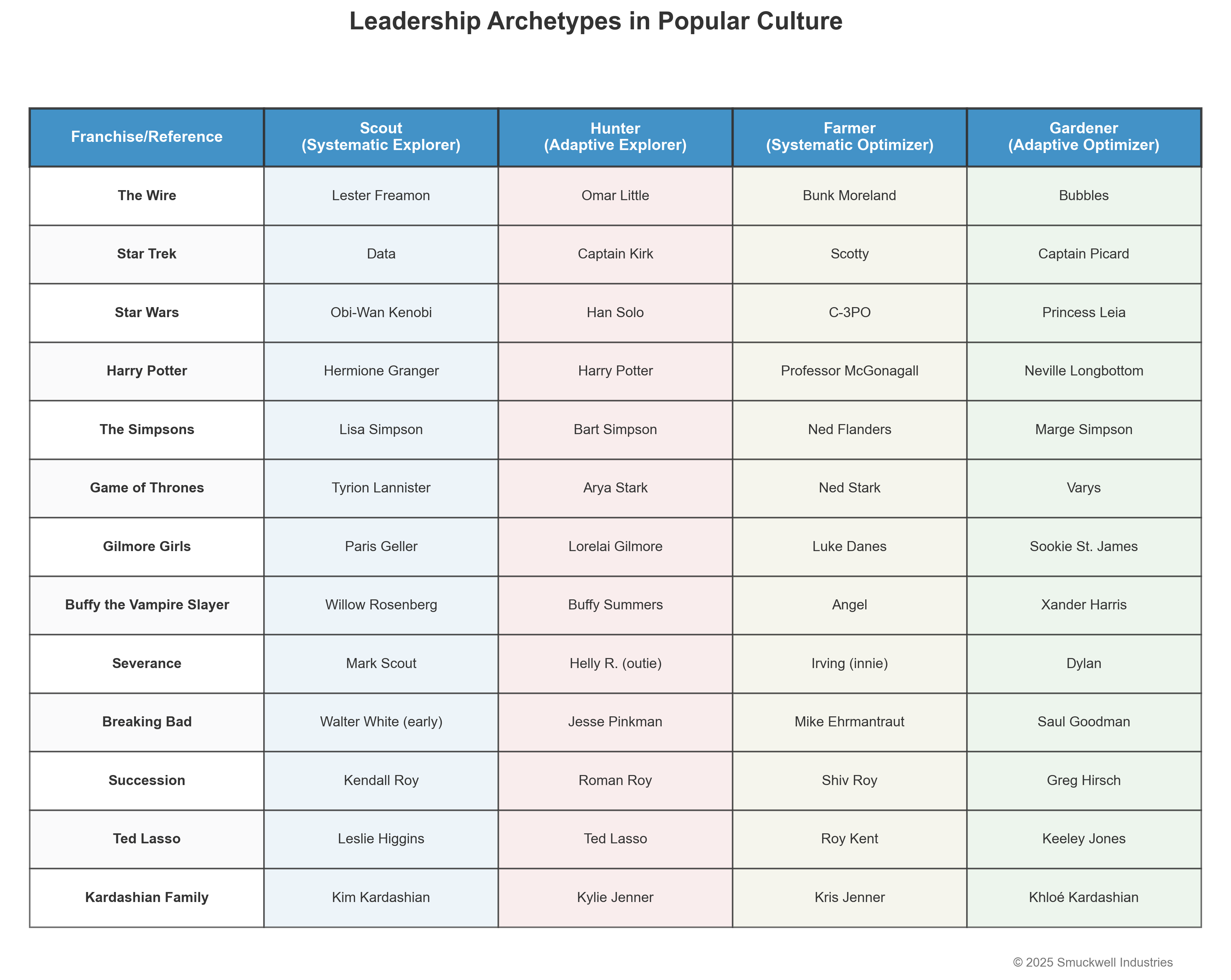
Figure 4: Leadership archetype examples from popular culture.
Archetypes in Value Creation: Different Phases Need Different Leadership
The value development lifecycle of a product or business follows a common arc. The archetypes have different capacities to contribute at different stages in the journey because their strengths are aligned to specific phases of development.
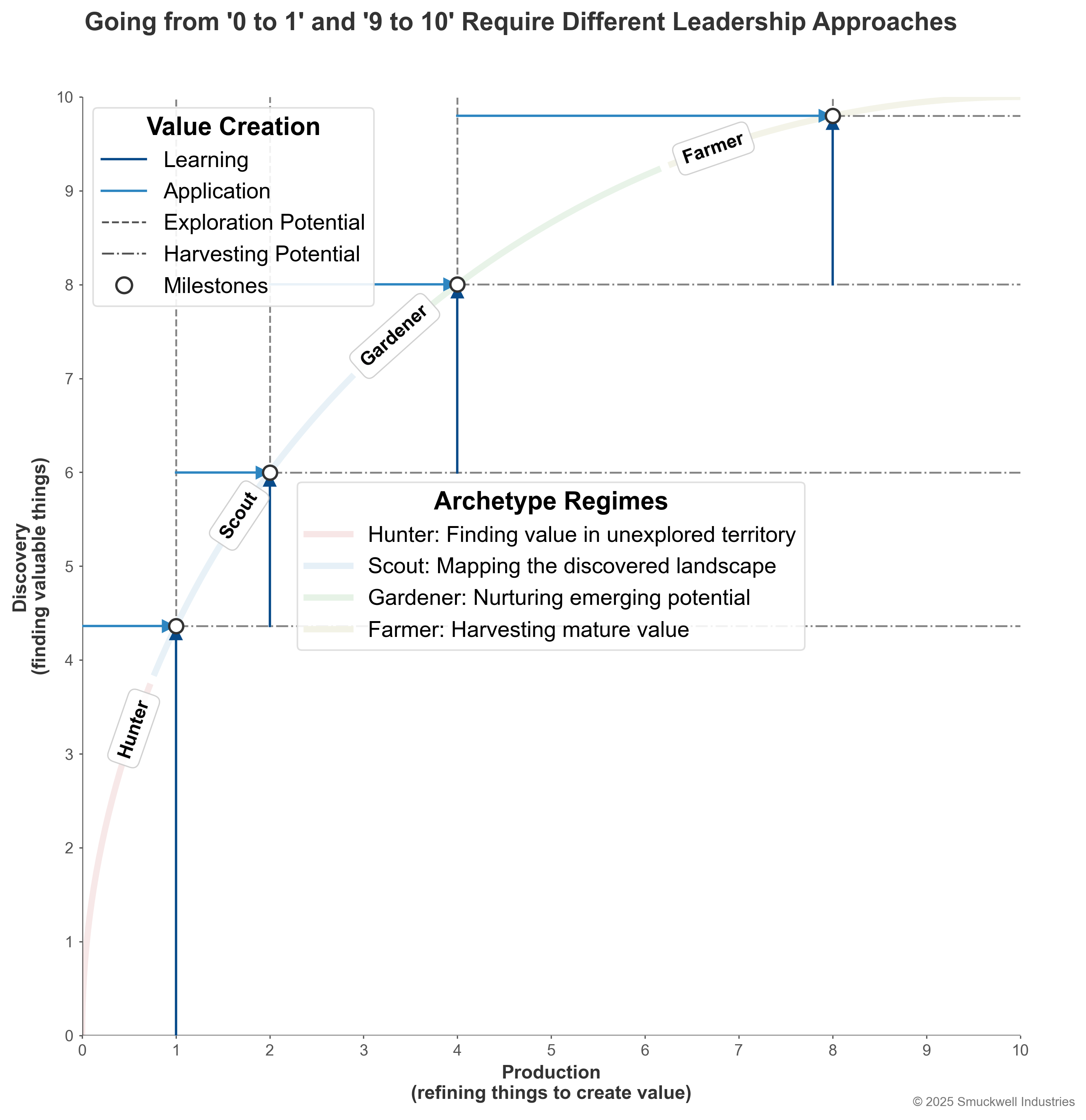
Figure 5: Leadership archetypes and their roles in the progression from idea to established value.
As illustrated in the figure above, the value creation journey can be understood as a progression through distinct phases:
Discovery Phase (Hunters): Hunters identify new opportunities and possibilities in uncharted territory. They thrive in environments of high uncertainty and potential, spotting patterns and connections others miss. Their adaptive exploration mindset allows them to rapidly identify promising directions without getting bogged down in excessive analysis.
Validation Phase (Scouts): Once potential opportunities are identified, Scouts systematically explore and validate their viability. They bring methodical rigor to understanding the landscape, conducting structured research, analyzing market data, and building comprehensive maps of the opportunity space. Their systematic approach ensures thorough validation before significant resources are committed.
Scaling Phase (Gardeners): As validated ideas move toward implementation, Gardeners excel at adaptive optimization—building flexible systems that can respond to evolving conditions while maintaining core functionality. They create adaptable frameworks that balance structure with flexibility, allowing innovations to grow in controlled but responsive environments.
Optimization Phase (Farmers): When solutions reach maturity, Farmers apply systematic optimization to maximize efficiency, reliability, and predictable value creation. They establish standardized processes, implement quality controls, and drive continuous refinement to extract maximum value from established systems.
This progression illustrates why organizations need all four archetypes working in sequence—and sometimes in parallel—to successfully transition ideas from initial concept to established value. Different stages of the value creation process demand different archetype strengths, and premature application of later-stage archetypes can stifle innovation, while delayed application of later-stage archetypes can prevent scaling and optimization.
Misalignments between leadership archetypes and organizational needs significantly impact strategic outcomes. When Hunters lead initiatives requiring stability, or Farmers direct breakthrough innovation efforts, organizations struggle to achieve their objectives despite talented leadership.
The Cyclical Prominence of Leadership Archetypes
There is a natural cycle to the prominence of different archetypes that aligns with business trends and organizational life cycles. Understanding this rhythm helps leaders proactively cultivate the right capabilities at the right time rather than reactively responding to challenges.
The Organizational Life Cycle and Archetype Demand
Startup/Launch Phase
Dominant Archetypes: Hunters → Scouts
During initial market entry, organizations typically need Hunter energy to drive innovation and bold market positioning. As the business establishes initial traction, Scout capabilities become increasingly important to systematically map the opportunity landscape and identify sustainable paths forward.
Growth Phase
Dominant Archetypes: Scouts → Gardeners
As organizations scale, the methodical exploration of Scouts helps identify optimal growth vectors. As these vectors are confirmed, Gardeners become essential to build adaptable systems that can flex with rapid growth while maintaining quality and culture.
Maturity Phase
Dominant Archetypes: Gardeners → Farmers
When organizations reach market saturation, Gardeners help optimize existing operations while maintaining adaptability. As markets stabilize, Farmer capabilities become increasingly valuable to systematize operations, maximize efficiency, and establish predictable performance.
Renewal/Disruption Phase
Dominant Archetypes: Farmers → Hunters
As markets eventually face disruption or saturation, organizations that have become dominated by Farmer mindsets often struggle. This creates renewed demand for Hunter archetypes who can identify breakthrough opportunities and lead bold repositioning efforts.
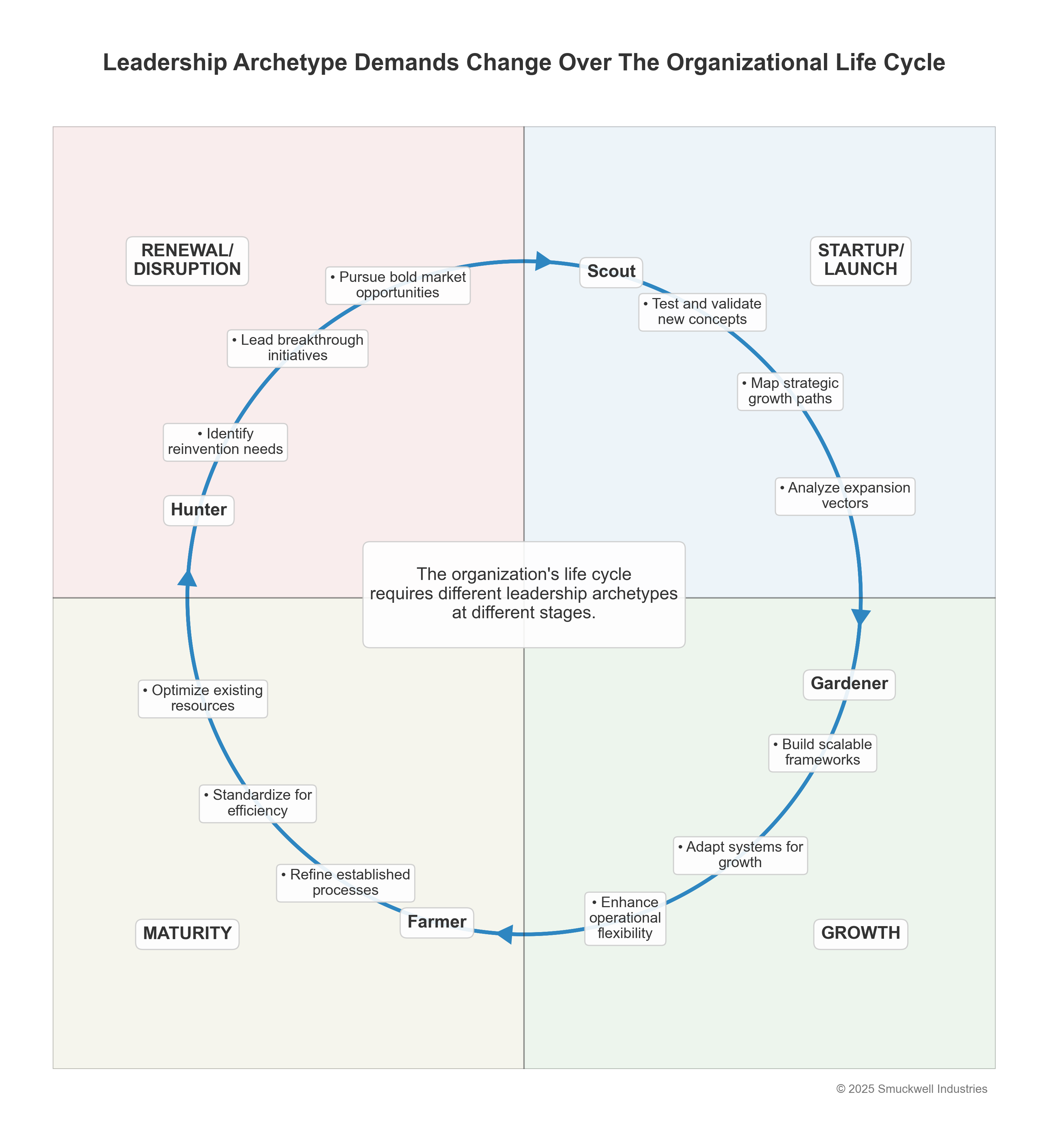
Figure 6: Organizations need different leadership archetype capacities as they mature.
Industry Trend Cycles and Archetype Demand
Beyond organizational life cycles, broader industry and economic trends also influence which archetypes provide the most strategic value:
During Technological Disruption
Critical Archetypes: Hunters and Scouts
When new technologies emerge (e.g., AI, blockchain, quantum computing), Hunters who can rapidly experiment with applications provide early advantages. Scouts who can systematically map implications and develop comprehensive strategies help organizations navigate complexity.
During Economic Contraction
Critical Archetypes: Farmers and Gardeners
During downturns, Farmers who can establish cost discipline and operational efficiency become essential. Gardeners who can adapt existing systems to changing resource constraints while maintaining core capabilities help organizations remain resilient.
During Regulatory Change
Critical Archetypes: Scouts and Farmers
When regulatory landscapes shift, Scouts who can methodically analyze implications and compliance requirements become vital. Farmers who can implement systematic responses and establish new operational norms help organizations mitigate risk.
During Market Consolidation
Critical Archetypes: Gardeners and Hunters
As industries consolidate, Gardeners who can adaptively integrate systems and cultures provide integration advantages. Hunters who can identify distinctive competitive positions in increasingly crowded markets help organizations maintain differentiation.
Optimizing Leadership Effectiveness for Different Archetypes Through Structure and Incentives
Different archetypes thrive in different organizational environments and respond to different incentive systems. Misalignment between an archetype’s natural tendencies and their environment often leads to underperformance despite strong talent.
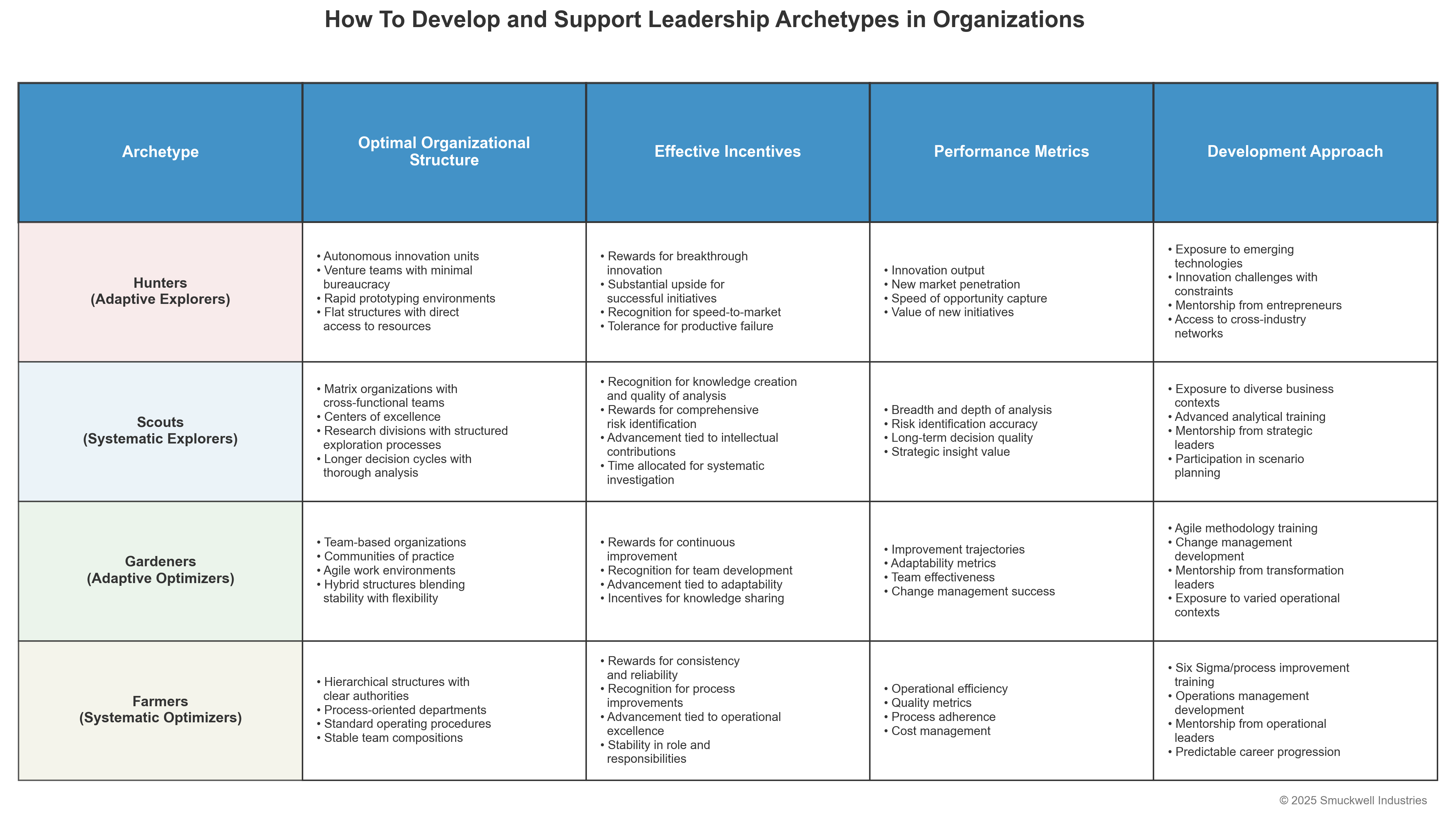
Figure 7: Different leadership archetypes require different kinds of support.
Building a Balanced Leadership Portfolio
The most successful organizations deliberately construct leadership teams with complementary archetypes aligned to their strategic contexts. Key practices include:
Maintaining archetype diversity in leadership teams regardless of current priorities
Developing archetype versatility through targeted development experiences
Creating cross-archetype collaboration mechanisms that leverage complementary strengths
Implementing early warning systems that signal when archetype needs are shifting
Establishing succession planning that accounts for anticipated archetype requirements
Conclusion: The New Leadership Imperative is “Both-And > Either-Or”
In an era where businesses must simultaneously explore new frontiers while optimizing existing operations, understanding and deploying the right leadership archetypes becomes a critical competitive advantage. Organizations that master this framework create agile leadership portfolios capable of navigating complexity with precision.
As illustrated in Figure 5, the journey from concept discovery to mature delivery requires all four archetypes working in concert, each contributing their unique strengths at appropriate phases of development. The Hunter’s vision, the Scout’s validation, the Gardener’s scalable frameworks, and the Farmer’s optimization all play essential roles in successful value creation.
Organizations that understand these cyclical patterns gain substantial advantages in talent strategy. Rather than reactively shifting leadership approaches after conditions change, they can proactively develop and deploy the right archetype capabilities in anticipation of emerging needs.
There is no best archetype (unless it’s your archetype 😉). But you need strength in the right archetypes, in the right roles, at the right times. Don’t send Bubbles when you need Omar, and vice versa.
Gratitude
Sara Smucker Barnwell for coaching me on: how to see through other people’s lenses; the necessity of strong complements in teams; and the importance of model simplification.
Patti Worley, Candice Carr, and Lydia Petrakis for taking me on adventures that revealed these archetypal patterns.
Casey Flaherty for incepting me into this inquiry with our “The Wire” conversations.
Jae Um for provoking me to examine Rumsfeld.
Chris Clearfield for helpful feedback on Rumsfeld alignments.
Alex Hamilton for directing me to instrumental Simon Wardley content (”Wardley...innit?”).
References
Collective Genius by Linda A. Hill, Greg Brandeau, Emily Truelove and Kent Lineback
The Exploration-Exploitation Dilemma: A Multidisciplinary Framework by Oded Berger-Tal, Jonathan Nathan, Ehud Meron, David Saltz
On Pioneers, Settlers, Town Planners and Theft. by Simon Wardley
Commandos, Infantry, and Police by Jeff Atwood
The Decision Book: Fifty Models for Strategic Thinking by Mikael Krogerus and Roman Tschäppeler
A Leader’s Framework for Decision Making by David J. Snowden and Mary E. Boone

Code samples that produce visualizations used in this article are here per @Dazza Greenwood’s question on LinkedIn: https://github.com/Smuckwell-Industries/Curious-Thinking/blob/main/hunter-scout-gardener-farmer/hunter_scout_gardener_farmer.ipynb
Philip Lee’s question pushed me to think about superposition of leadership effort and generate the attached gif. https://www.linkedin.com/feed/update/urn:li:activity:7380646725419577344?commentUrn=urn%3Ali%3Acomment%3A%28activity%3A7380646725419577344%2C7385013118218821632%29&dashCommentUrn=urn%3Ali%3Afsd_comment%3A%287385013118218821632%2Curn%3Ali%3Aactivity%3A7380646725419577344%29